Live Performances
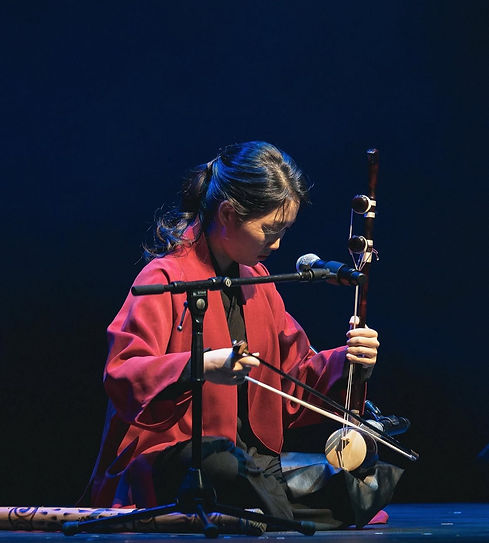
Darangshi for Haegeum and Gayaeum (Dae-Sung Kim)
Darangshi is a Jeju dialect word meaning “high peak,” and the piece draws inspiration from the painful history of the April 3rd Incident of 1948. It was composed in remembrance of those who died without names, honoring their memory through music. The work follows an ‘A–B–A’ form and incorporates elements of Namdo gyemyeonjo and Seodo vocal styles alongside the Western Phrygian mode. Overall, it achieves a delicate balance between traditional Korean idioms and Western musical elements.

Ensemble Go-Gong [Labyrinth]
Labyrinth is inspired by the theme of an adventurous journey through a mysterious maze. The unfolding of the music, as it navigates the twists and turns of the labyrinth, reflects our own efforts to find balance while living in today’s complex world
Ensemble Go-Gong [The Way to Sang-ju]
The Way to Sangju is a work that reinterprets traditional Korean melodies in a contemporary way through a collaboration between Western music and gugak. The piece portrays the quiet village of Sangju, imbued with longing for those who can no longer be seen. This sentiment is expressed through the interplay of folk-inspired solos on traditional Korean instruments with piano and drums. The music captures the essence of han—the deep sorrow and yearning that are central to Korean traditional emotion

Ewha Womans University Korean Music Orchestra
Concerto for 25-String Gayageum Anatolia-
[Wind over the Plateau]
Composer: Hwang Ho-jun
Concerto for Saenghwang [Wind]
Composer: Lee Jun-ho
Korean Orchestral Piece [Moon Jar]
Composer: Kang Sang-gu
The 29th [Stage for Young Emerging Artists]
Jajinhanip is a pure Korean term referring to Sakdaeyeop (數大葉), another name for the contemporary gagok. The word sak (數, “fast”) is rendered in Korean as jajin (“quick”), dae (大, “great”) as han (“one, big”), and yeop (葉, “leaf”) as “piece” or “song.” Today, the term “Jajinhanip” refers specifically to gagok performed instrumentally, without vocals, in a wind ensemble setting. Instead of the sepiri used in regular gagok accompaniment, it is led by the hyangpiri together with daegeum, haegeum, janggu, and drum.